Maritime FOB
The U.S. Navy just demonstrated the future of maritime warfare and almost no one noticed

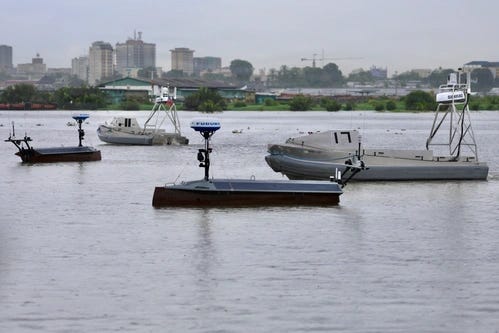
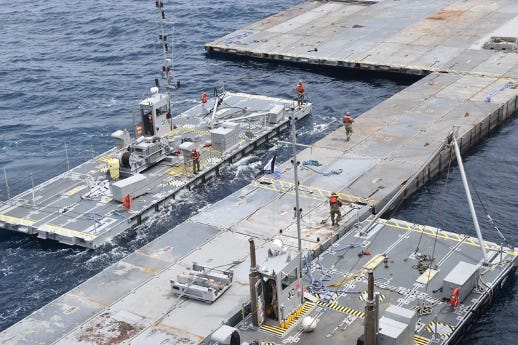
In Exercise Obangame Express 2026, US Navy Seabees built a floating pier in an austere environment. On its face, that is familiar territory. The Navy has been building expeditionary infrastructure for generations. But what made this instance different was not the act of construction; it was what that infrastructure enabled. The pier did not serve a destroyer or a logistics ship. It served autonomous surface vessels. In doing so, it revealed something far more consequential than a tactical vignette. It exposed a new kind of naval capability: a forward-deployed, mobile seabase designed not around ships, but around systems.
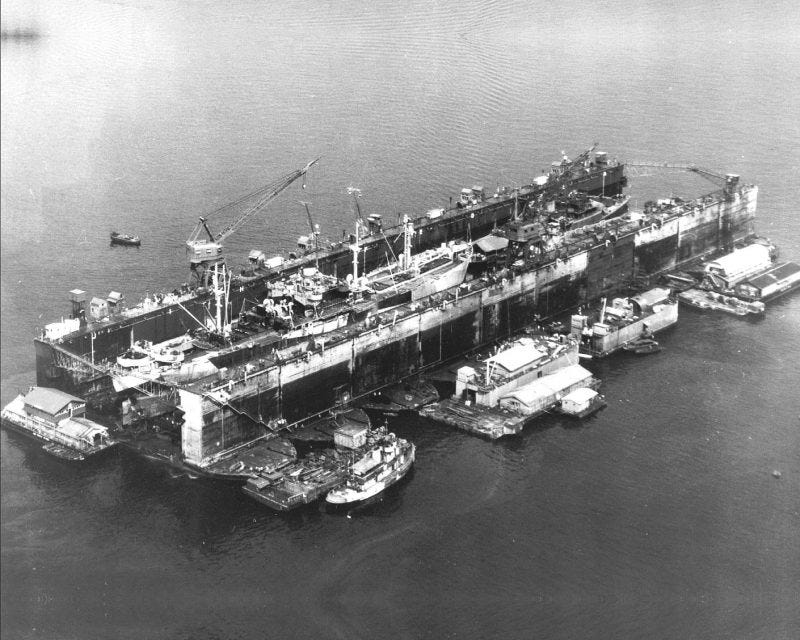
To understand the significance, it helps to look backward. During the Second World War, the US Navy confronted the tyranny of distance across the Pacific. Ships broke down, supply lines stretched thin, and operational tempo risked collapse under the weight of geography. The solution was the Advance Floating Support Base and a SERVRON (Service Squadron), an assemblage of repair ships, tenders, floating drydocks, and logistics platforms that moved forward with the fleet. These were not glamorous vessels, but they were decisive. By bringing repair and sustainment closer to the fight, they collapsed distance. Ships no longer needed to withdraw to Pearl Harbor or the West Coast for repair or maintenance. Combat power could be regenerated forward, and the fleet could remain persistently engaged. In effect, the Navy turned sustainment into a maneuver function.
What unfolded in Obangame Express echoes that same logic but with a fundamental twist. The Seabee-built pier enabled the launch, recovery, and sustainment of unmanned systems without reliance on fixed port infrastructure. More importantly, it demonstrated the physical interface between autonomy and logistics. This is the missing layer in discussions of a “New Robot Navy.” Autonomous vessels do not scale simply by building more of them. They scale through the tactical and operational infrastructure that supports them. They scale from nodes, not from platforms.
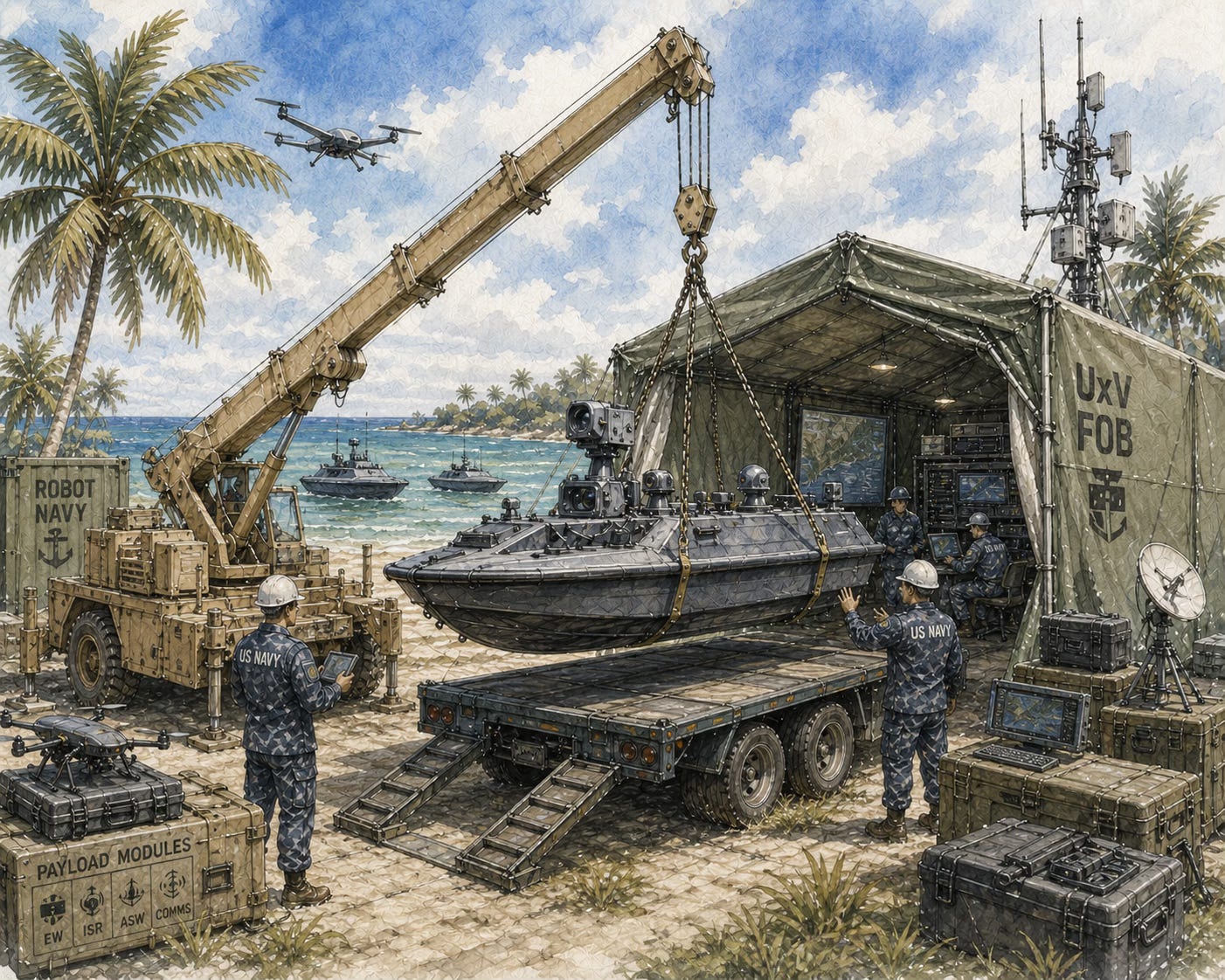
What emerges from this realization is a new construct: a UxV Forward Operating Base, or UxV-FOB—a maritime FOB. Mobile, adaptable, and flexible, it is the modern analog to the WWII AFSB, merged with the land-based concept of a Forward Operating Base, transformed by the technologies and logic of the Fourth Industrial Revolution. It is not a single ship or installation. It is a system composed of interlocking layers that together generate, sustain, and employ autonomous combat power at the edge.
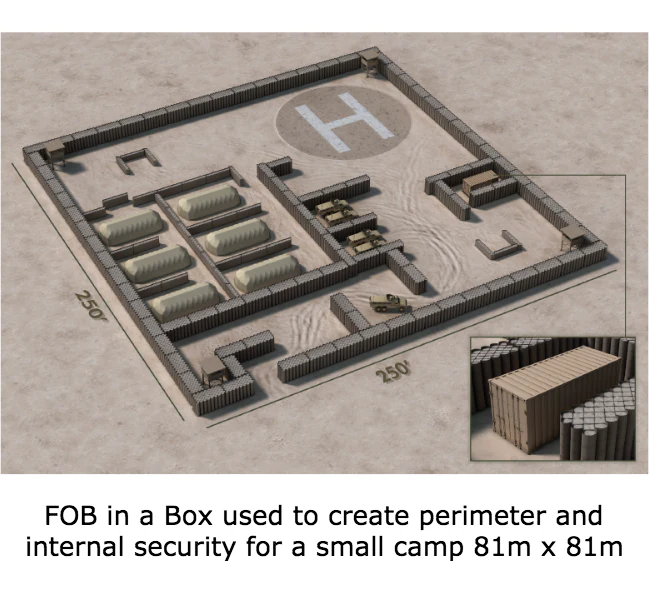
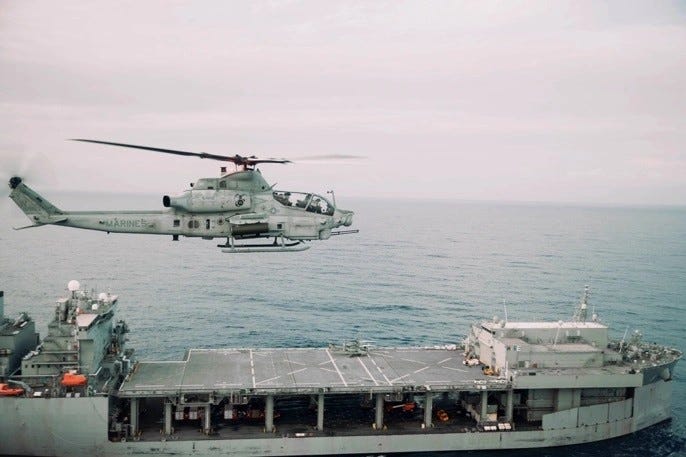
At its foundation is a seabase layer, a mobile platform such as an Expeditionary Sea Base, an LSM, or a modified commercial hull that provides persistence, mobility, and a degree of protection. This layer allows the entire system to reposition within a theater, complicating adversary targeting and enabling operational agility. Attached to it, physically and conceptually, is the interface layer, the modular pier system demonstrated by the Seabees. This layer is the keystone. It connects the logistics system to the autonomous fleet, enabling launch and recovery, refueling or recharging, production of new units, and mission package/payload exchange. Without it, autonomy remains tethered to traditional ports and loses its operational flexibility.
Above this sits the production and sustainment layer, which represents the most profound break from the past. Where WWII floating bases repaired ships, the UxV-FOB enables forward production. Containerized additive manufacturing systems, kitted compute and weapon systems, composite repair modules, and modular assembly capabilities enable the fabrication of components and even entire small vessels in theater. Batteries can be refurbished, sensors replaced, and payloads reconfigured. The distinction between maintenance and manufacturing begins to blur. The base does not merely sustain combat power; it regenerates it.
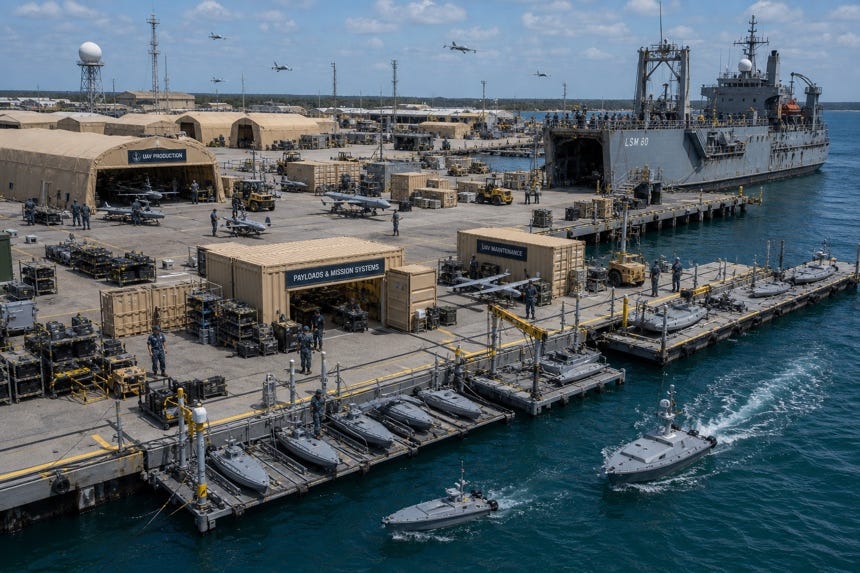
Overlaying all of this is the digital and command layer. Edge computing systems process data locally, reducing reliance on vulnerable communications links. AI-enabled autonomy management tools build and coordinate swarms of uncrewed systems. Resilient communications networks tie the node into the broader force while allowing it to operate independently if required. This layer transforms what would otherwise be a logistics hub into a warfighting node.
Taken together, these layers redefine how naval forces operate. A UxV-FOB can be deployed into an austere environment, assembled rapidly, and begin generating combat power almost immediately. Autonomous vessels are launched continuously, their payloads swapped out, and their software updated at a pace far exceeding that of traditional platform cycles. Damaged systems can be recovered, repaired, or replaced on-site. New systems can be introduced incrementally. And when the tactical situation demands it, the entire node can disassemble and relocate, leaving behind little more than bootprints.
The conceptual breakthrough lies in what these collapse. For centuries, naval warfare has treated production, sustainment, and operations as distinct domains. Industrial bases build platforms. Logistics systems sustain them. Fleets employ them. The UxV-FOB collapses these functions into a single forward-deployed capability. The factory moves to the fight. The base becomes part of the fleet. Production becomes combat power.
This shift has significant industrial implications. Traditional shipbuilding, with its emphasis on large, capital-intensive platforms and long production timelines, becomes only one part of the equation. Greater advantage accrues to those who can rapidly integrate systems, modularize production, and fuse hardware and software in dynamic ways. Smaller firms, robotics companies, software developers, and advanced manufacturing specialists gain new relevance. The center of gravity moves away from the CONUS shipyard and toward the forward-deployed integration node.
This points toward a different kind of fleet, one defined less by static force structure and more by dynamic regeneration. A fleet that can absorb losses, adapt in theater, and evolve continuously. A fleet whose effectiveness is measured not just by what it deploys, but by how quickly it can reconstitute and reconfigure itself under pressure. Toynbee’s “challenge and response” exercised at the tactical and operational level.
During World War II, the Seabees built the bases that allowed the fleet to advance across the Pacific. In Obangame Express, they built a window into a new era. They did not set out to build a new class of warship. They built a pier. In doing so, they revealed the first visible component of a modern AFSB. A node, not a ship, designed to manufacture, sustain, and fight autonomous systems at the tactical edge.
There should be factories built to supply ammunition on exclusive factory ships. This will give cheap energy for production and no regulatory hurdles , the navy already dumps waste on the ocean so why cant we built fully autonomous ammunition manufacturing ships.